
Which Australian Banks Actually Let You Send PayID to Bookmakers
 Available in US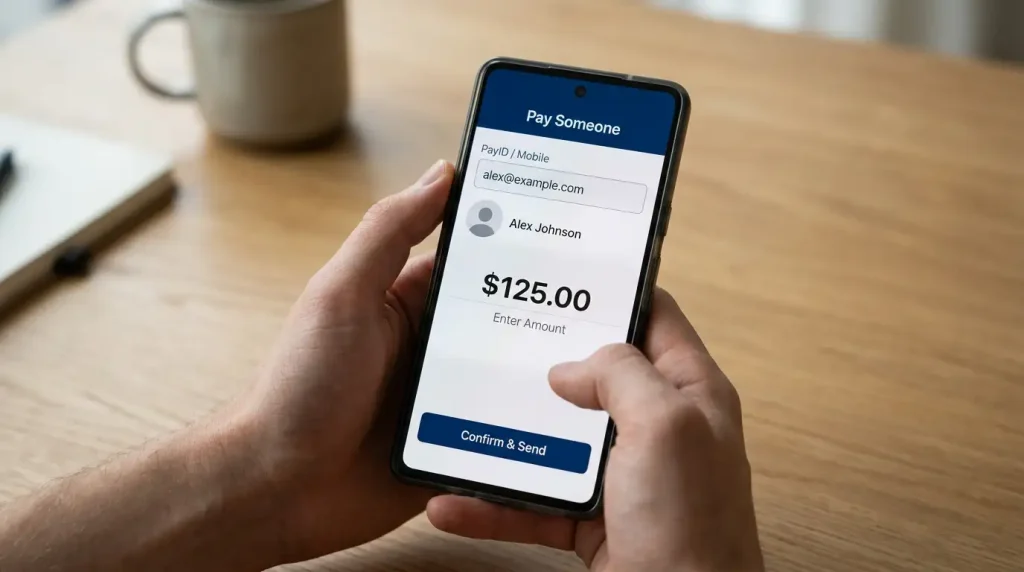
A reader messaged me last month in genuine frustration. She had tried to fund a bet365 account from her digital-only bank and the transfer had bounced twice. “It says PayID. It shows the name. It just will not send.” The problem turned out to be simple once I dug in – her bank treated certain corporate payee aliases differently from consumer ones. The rail worked. The bank’s risk rules did not.
Which bank you send from changes the experience in ways that are rarely obvious from the outside. I want to lay out what actually happens across the big four, the mutual sector, the neobanks and fintechs, and the handful of banks that add friction to bookmaker PayID payments specifically. By the end you should know exactly which bank on your phone is your best tool for betting deposits and which ones you should leave out of the equation.
The NPP participant landscape in plain language
The New Payments Platform connects more than 110 banks and credit unions across Australia, covering the overwhelming majority of account-holding adults. More than 114 million accounts could send or receive NPP payments by the end of 2024, which in a country of 26 million adults effectively means universal coverage with a comfortable margin.
Participation in the NPP is a technical question, not a policy one. A bank that participates lets you send and receive PayID payments. A bank that does not, does not. The vast majority of Australian banks participate, but the rules each bank applies on top of the raw rail – daily limits, new-payee holds, payee-category flags, outright blocks on specific categories – vary dramatically.
What this means practically: when you send a PayID payment to a bookmaker, two things have to happen. First, your bank has to support NPP outbound payments. Second, your bank’s internal rules must not block the specific payment. The first is almost always fine. The second is where you run into variation.
Around 47% of registered PayID users transact via the alias at least weekly, which is a serious adoption level for a rail that only launched in 2018. Your bank’s comfort with that volume directly shapes how much friction you will encounter when you add a bookmaker payee for the first time.
How the big four actually behave
Commonwealth Bank, Westpac, NAB, and ANZ all participate in the NPP and all support outbound PayID payments to bookmaker aliases. None of them categorically block bookmaker payees. All of them apply friction.
The friction looks like this. Your first PayID payment to any new payee – bookmaker or otherwise – may be held for up to 24 hours by default on a big-four bank. This is a new-payee precaution and it is the single most common reason a first-time Sportsbet or Ladbrokes deposit does not land instantly. The hold is bank-imposed, not operator-imposed, and it applies equally whether you are paying a bookmaker, a tradie, or a friend who just shared a PayID for the first time. I have written about the mechanics of the 24-hour hold in more detail separately.
All four banks also apply daily transfer limits that cap how much you can send via PayID in a 24-hour period. Default limits sit anywhere from AU$5,000 to AU$25,000 depending on the bank and account type. You can raise these limits through the bank app, usually with an extra security step, up to some higher ceiling that varies by bank – often AU$100,000 per day for Commonwealth Bank, somewhat less elsewhere.
None of the big four add a specific surcharge on PayID payments to bookmakers, and none of them will refuse a payment on gambling-category grounds as long as the operator is licensed and the payee alias resolves cleanly. The friction is administrative, not moral.
One nuance: big-four banks have been increasing their focus on gambling-category spending in their customer-facing insights and spending controls. Several of them now let you self-impose a gambling block on your own account, which will intercept PayID payments to known bookmaker aliases if you have opted in. This is a responsible-gambling feature, not a bank policy, and it sits on top of the normal PayID flow rather than replacing it.
Mutuals, customer-owned banks, and credit unions
Mutuals and credit unions participate in the NPP through the same infrastructure as the big four, and in practice the PayID experience is broadly similar. Where mutuals differ is on edge-case friction – specifically around new-payee holds, which tend to be either shorter or more flexible than the big four apply.
I have seen Heritage Bank, Newcastle Permanent, and several other mid-sized mutuals clear first-time PayID payments to bookmakers inside an hour rather than a full 24 hours. This is not a published policy but a lived observation, and it varies from month to month. The underlying explanation is that mutuals tend to run smaller fraud-control budgets and prefer to lean on the NPP’s own payee-verification layer rather than adding another hold on top.
Credit unions behave similarly. Smaller institutions apply fewer rules on top of the NPP rail, which usually means less friction for legitimate bookmaker deposits and slightly more exposure if something goes wrong. The tradeoff is worth understanding but not worth dramatising. The core anti-fraud protection on a PayID payment is the payee-name match – the bank app showing you the registered business name before you send – and that protection exists identically at every participating institution.
If you are deciding where to hold your betting bankroll, a mid-sized mutual often gives you a smoother first-time deposit experience than a big-four bank. The tradeoff is that you lose the higher daily limits the big four allow.
Neobanks and fintechs in practice
Neobanks like Up and Ubank participate in the NPP through their parent-bank or API-partner relationships, and PayID works on them about as reliably as on any other Australian bank. Where they differ is in how they surface the payment process and how aggressively they flag gambling-category transactions.
Up Bank, for example, offers a customer-facing spending-category view that treats gambling as a distinct bucket and lets you set a monthly cap. Sending a PayID payment to a known bookmaker alias will be tagged as gambling and count against that cap. This is a feature, not friction – the payment still goes through normally – but it does mean your betting activity is more visible in your own banking app than it would be on a big-four card statement.
Neobanks tend to apply shorter new-payee holds than the big four. I have seen Up Bank process first-time PayID payments to bookmakers inside fifteen minutes rather than the 24-hour big-four default. The daily transfer limits are sometimes lower on neobanks than on incumbents, though, so if you are running a larger bankroll you may bump against a cap that would not apply on a Commonwealth Bank account.
Revolut, Wise, and other cross-border fintechs operate differently again. Some of them do not participate in the NPP directly and therefore do not support PayID as an outbound rail. Others do. The quickest check is to see whether Pay Someone by PayID appears as an option in your fintech’s app. If it does, it works. If it does not, you will need to fund the bookmaker from a different account.
Banks that restrict or block bookmaker payees
Some banks actively block PayID payments to known gambling categories, and the credit-card gambling ban that took effect on 11 June 2024 has sharpened the landscape considerably. That ban made it a breach for credit card payments to be made to licensed wagering operators, with penalties of up to AU$247,500 for operators accepting them. The ban does not apply to PayID specifically – PayID runs on debit-side accounts by construction, so the credit card prohibition does not touch it directly – but it has shifted the overall regulatory posture of banks toward gambling payments.
A smaller number of banks have chosen to let customers opt into category-level blocks. If you have turned on a gambling block in your bank app, your own bank will intercept PayID payments to known bookmaker aliases and refuse them. This is a feature you activate voluntarily, not a default. Reviewing your spending controls before you deposit is worth thirty seconds of your time.
Separately, some smaller mutuals and credit unions have explicit policies against processing gambling-related payments. These are niche and usually documented clearly in the bank’s terms of service. If you are using one of them, your PayID payments to bookmakers will simply be refused at the bank level with no warning. The funds never leave your account, but the payment never lands either.
The practical move is to test a small deposit first. Send AU$10 to the bookmaker via PayID. If it lands cleanly, your bank is not blocking the category. If it bounces or holds indefinitely, something is being intercepted – and that is your signal to either change bank or change your spending controls before committing a larger deposit.
Some of them apply a 24-hour hold on the first payment.
The wider context sits in our guide to PayID betting in Australia.
