
PayID Betting KYC: Documents, Timing and What Changed After 29 September 2024
 Available in US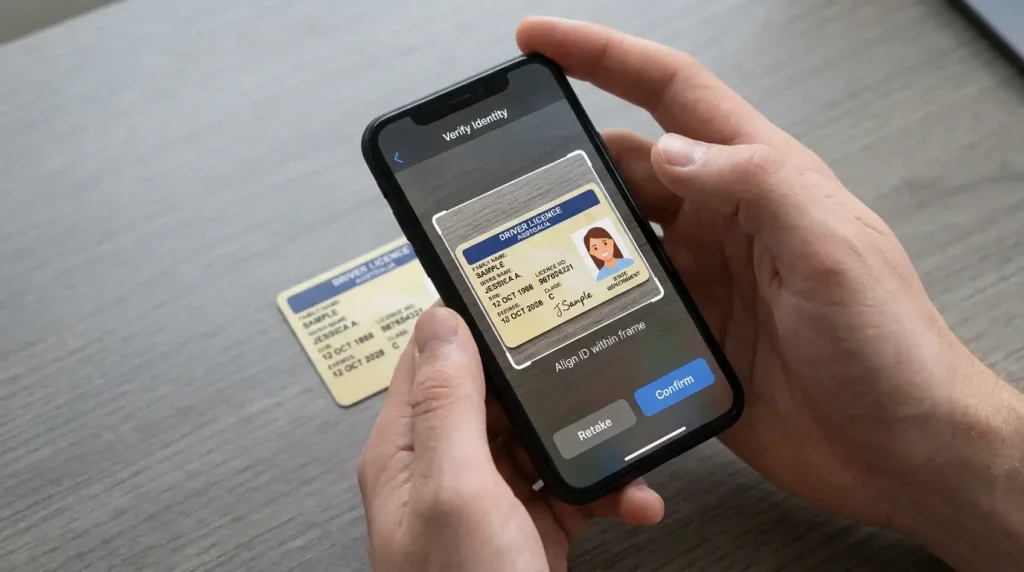
September 29, 2024 did not generate headlines on the news cycle but it was the day Australian wagering genuinely changed shape. From that date, every licensed provider was required to complete a compliant Australian Customer Identification Procedure before opening an account. Not after the first deposit, not after the first withdrawal, not eventually when convenient. Before. That one word rewrote the signup experience at every licensed operator in the country.
Punters who opened accounts before that date sometimes find themselves confused by what their newer accounts ask for. Punters who opened accounts after the date sometimes wonder why the process is heavier than they expected. Both confusions trace back to the ACIP reform, and understanding what it actually requires explains most of the KYC friction you will hit on PayID betting today.
What ACIP actually requires
ACIP – the Australian Customer Identification Procedure – is the AML/CTF framework that every licensed wagering operator must apply to new customers at the account-opening step. The framework is not new in concept. What changed on 29 September 2024 was the mandatory sequencing: pre-verification, not post-verification.
Before the change, licensed operators were allowed to open accounts on minimal information and complete identity verification within 14 days. That window allowed punters to deposit and bet in the interim with a provisional account. The reform closed that window. An operator may no longer open an account at all until the identity has been verified to ACIP standard.
The standard itself is rigorous in ways that matter for day-to-day betting. Operators must verify full legal name, date of birth, and residential address through approved electronic or document-based methods. The verification must be current – not six months old, not inherited from a previous account, not rolled over from a partner site. And the verification must be logged against the specific account in a form that supports downstream AUSTRAC reporting.
The sector-wide view of this shift, from the Responsible Wagering Australia CEO Kai Cantwell in the year leading up to the reform, was characteristically blunt about the stakes: “If these bans were introduced, Australia would lose billions of dollars in tax revenue. Governments would lose all oversight of the industry, and Australians would be gambling in dangerous illegal markets.” The ACIP reform was not a ban. It was one of the measures that helped ensure the licensed market could remain distinguishable from unlicensed alternatives by running a higher compliance standard. Tightening KYC is part of the trade that keeps the licensed market credible.
For a PayID-funded account specifically, ACIP verification creates one further knock-on effect. The identity record on your bookmaker account must match the name attached to the bank account your PayID alias sits on. If there is a mismatch – a nickname versus a legal name, a former surname versus a current one, an initial versus a spelled-out middle name – deposits can still work but payouts will stall until the mismatch is resolved.
Documents that are commonly accepted
The document pack a licensed operator asks for is broadly consistent across the market, with minor variations in which electronic verification services each operator plugs into.
The primary documents are photo ID – a current Australian driver’s licence or a passport. A driver’s licence is the commoner choice because the back of the card carries address detail that the front does not, and the operator’s verification service can pull both sides into a single check. A passport is cleaner from a photo-ID perspective but requires a separate proof of address.
Proof of address is the second pillar. A recent utility bill, a bank statement, a government correspondence item, or a council rates notice – all dated within an acceptable window, typically three months. The document must show the address the operator has on file. If your driver’s licence address is out of date, your proof-of-address document must reconcile the difference, which occasionally means providing two separate items.
Medicare cards show up as a commonly accepted secondary document. The operator’s verification service uses the Medicare number and name to cross-check against a government register, which strengthens the overall identity confidence score. Not every operator uses Medicare verification, but where it is available it often speeds up the overall process.
For enhanced verification or source-of-funds reviews that sit on top of the base ACIP check, operators may ask for additional documents. Recent payslips, bank statements covering the deposit pattern, tax documentation, or evidence of a specific one-off source of funds. This is a separate layer I cover in detail in a piece on source-of-funds checks on PayID betting payouts, because it is the single most involved part of the process and worth understanding on its own terms.
Timing and the pre-verification experience
The pre-verification step at signup is designed to complete inside the signup flow itself rather than kicking the punter out to a separate review window. In practice this means the ACIP check is done in real time against Australian identity verification services, typically in seconds to a minute, and the result returns before the account is formally opened.
The infrastructure underlying these checks is genuinely fast. BetStop alone handles more than eight billion verification checks over six-month windows, with average check durations around three milliseconds. ACIP verification sits on top of a similar scale of real-time infrastructure, which is what lets the reform work inside a consumer-grade signup flow without making it feel like a passport application.
When real-time verification fails – because the data you submitted does not match government records, or because you have an unusual address history, or because electronic verification simply cannot confidently match you – the signup flow hands off to a manual review. Manual review typically takes one business day. During that window you do not have an open account and cannot deposit, bet, or do anything else that an opened account would normally allow.
This is where timing matters for punters. If you intend to bet on a specific event, do not open the bookmaker account the same day as the event. If electronic verification succeeds you will be fine. If it fails, you will be locked out for a business day and miss whatever you were trying to bet on. Open accounts at least a week in advance of anything time-sensitive.
Once the account is open and verified, routine PayID deposits do not trigger additional KYC steps. The operator already has what it needs. Subsequent verification requests typically appear at specific trigger points: larger-than-usual withdrawals, changes in the bank account your PayID resolves to, address changes, or a general periodic refresh that most operators apply every few years.
Enhanced due diligence and what triggers it
Base ACIP verification is the floor. Enhanced due diligence sits on top of it and is triggered by specific risk indicators that the operator’s AML system flags as needing a closer look.
The common triggers include: withdrawals above a threshold that varies by operator but typically starts around AU$5,000; deposit patterns that deviate materially from the account’s baseline; deposits from multiple different PayID aliases across many bank accounts; rapid account activity changes after a long dormant period; and any alert raised by AUSTRAC-level monitoring that flows down to the operator.
When enhanced due diligence is triggered, the operator asks for additional documentation to support the continued operation of the account. The request is usually specific rather than open-ended – recent bank statements showing a specific deposit source, payslip evidence of a particular salary pattern, or documentation of a one-off event like an inheritance or asset sale. The more specific the request, the faster the review tends to conclude, because there is less ambiguity about what constitutes a complete response.
The response you give to an EDD request matters disproportionately. A complete, clean submission in the first reply often resolves the review inside one or two business days. A partial submission triggers follow-up questions that can extend the process to a week or more. Sending everything the operator asked for, in a single reply, in the format they asked for, is the single highest-leverage habit you can adopt.
One practical point worth emphasising. The operator’s EDD team is not adversarial. They are working under a compliance framework where the cost of missing a genuine issue is measured in regulatory action against the operator, not in inconvenience for the punter. Being frustrated with the process is fair. Being confrontational with the team running it rarely speeds anything up. Clean documentation, courteous correspondence, and patience are the tools that work.
Deeper reviews go into source-of-funds checks.
The wider context sits in our guide to PayID betting in Australia.
